

Clear Sight, Safer Drives — Wiper Blade Issues, Fixes, and When to Replace, plus Parts Support near Milwaukee, WI
Russ Darrow Nissan of Milwaukee – Clear Sight, Safer Drives — Wiper Blade Issues, Fixes, and When to Replace, plus Parts Support near Milwaukee, WI
Clear visibility is non-negotiable for confident driving, especially when your weekday commute includes freeway merges at the Marquette Interchange or a quick run across the Hoan Bridge. Wiper blades are easy to overlook until your windshield gets hazy, streaked, or loud with every pass. This guide explains common wiper blade issues, simple fixes you can try at home, when to replace the blades altogether, and how our parts team can help you choose the right set for your vehicle and install them correctly.
At Russ Darrow Nissan of Milwaukee, we view wiper blades as essential safety equipment. Our parts experts match the exact fit for your model, explain the differences between blade types, and coordinate fast installation with our service pros so you leave with a quiet, crystal-clear sweep.
Common wiper blade issues and quick fixes
- Streaking or smearing: Often caused by a dirty rubber edge or contaminated glass. Fix by gently wiping the blade squeegee with a clean, damp cloth and cleaning the windshield with automotive glass cleaner.
- Chattering or skipping: A sign of a dry, hardened squeegee, waxy film on the glass, or wrong blade angle. Clean the glass thoroughly and the blade, then test again. If chatter persists, the blade is likely due for replacement.
- Uneven wipe pattern: Blade lift at highway speed or a tired spring in the wiper arm can cause missed arcs. Verify the blade is seated properly in the adapter; if the arm has weak tension, have it inspected.
- Noisy wipes: Squeaks can come from a dry blade, silicone or wax residue on the windshield, or low washer fluid. Clean both surfaces and top off fluid; replace the blade if noise remains.
- Stuck-on road film: Construction dust, road salt, or tunnel residue can bond to glass and defeat even new blades. Use a dedicated glass polish or clay bar designed for windshields to strip residues before re-testing.
- Rear glass haze: Rear wipers often work harder clearing road spray. Clean the rear blade and glass; rear blades are smaller and usually need more frequent replacement.
- Washer nozzles weak or mis-aimed: Check for kinks in the hose, clogged nozzles, or low fluid. A toothpick can clear light clogs; our team can adjust or replace nozzles if the spray is still weak.
- Frozen or stuck blades: If a blade is stuck to the glass, lift it gently rather than running the motor. Forcing it can damage the motor, arm, or linkage.
If a good cleaning does not restore a quiet, even sweep, the rubber edge is likely worn, nicked, or hardened, and replacement is the safest move.
Quick checks you can do in your driveway
- Activate the washers and observe the spray pattern and coverage.
- Listen for squeaks or slaps and watch for missed arcs.
- Lift each wiper gently and inspect the rubber for nicks, splits, or a shiny, hardened edge.
- Wipe each squeegee with a lint-free cloth dampened with glass cleaner.
- Clean the windshield thoroughly, including the area under the parked wipers.
- Confirm the blade is clicked fully into the arm adapter and is not loose.
- Top off washer fluid with a high-quality, streak-free formula.
Windshields that have been waxed or coated with general-purpose products can cause chatter. If you’ve recently detailed your vehicle, use a glass-safe polish to remove any hydrophobic film from the wipe path and restore uniform friction.
A quick note about fluids: choose a quality glass-safe washer fluid and avoid household soaps, which can leave residue, dry out rubber, or clog nozzles. Our counter team can point you to the fluid that pairs best with your blades and driving routine.
When to replace your wiper blades
Most drivers get 6 to 12 months from a set of blades. That range depends on mileage, sun exposure, parking location, and how much urban freeway spray you encounter around I-94, I-43, and the Zoo Interchange. Garage-kept vehicles tend to get longer life; vehicles parked outside or driven frequently at highway speed typically need more frequent replacements.
- Replace right away if: You see splitting, missing chunks, persistent streaks after cleaning, chatter that won’t quit, or reduced contact at speed.
- Replace soon if: The edge looks glossy or hardened, the wipe is uneven, or you notice increased glare from light scatter during night driving.
- Replace as routine maintenance: If your blades are past 12 months, even if they still seem “okay,” a fresh set restores safety and reduces eye strain.
Rear blades work in harsher spray and often age faster than the fronts. Check them each time you wash the car and plan to replace them at least as often as the front set.
How to choose the right wiper blades
- Exact length matters: Using blades that are too long can cause contact issues and missed arcs; too short reduces coverage. We verify the correct size by VIN for a perfect fit.
- Blade type options: Conventional frame, hybrid, or beam-style blades are designed for different priorities. Beam blades curve for uniform pressure and quiet performance, which many daily commuters prefer.
- Connector compatibility: Modern arms use a variety of adapters. We confirm the right connector so installation is secure and quick.
- Rubber formulation: Premium natural rubber or advanced blends maintain flexibility and cut down on noise. Ask us about long-life compounds for heavy commuters.
- Front and rear specifics: Rear blades are model-specific and not just “short fronts.” We stock the correct rear blade and cap for your vehicle.
- Windshield condition: Micro-pitting from road grit can shorten blade life. If your glass is rough to the touch, consider a glass polish service to help new blades perform their best.
If you enjoy DIY, we are happy to set you up with the right parts and quick pointers. Prefer a hands-off approach? Our Express Service can install blades while you wait and perform a complimentary multi-point inspection, including a wiper check.
How our parts department can help
Our parts counter carries genuine, model-specific blades engineered to match your vehicle’s windshield curve and arm tension. That means quieter operation, fewer streaks, and reliable contact across the entire sweep. We also have the correct rear wiper assemblies, adapters, and caps that many big-box stores do not stock.
Tell us how and where you drive, and we will recommend the right combination of blade type and washer fluid. If you spend a lot of time on the Lake Parkway or along the lakefront where fine mist and road spray are common, a premium beam blade with a high-clarity washer fluid can make night driving noticeably more comfortable.
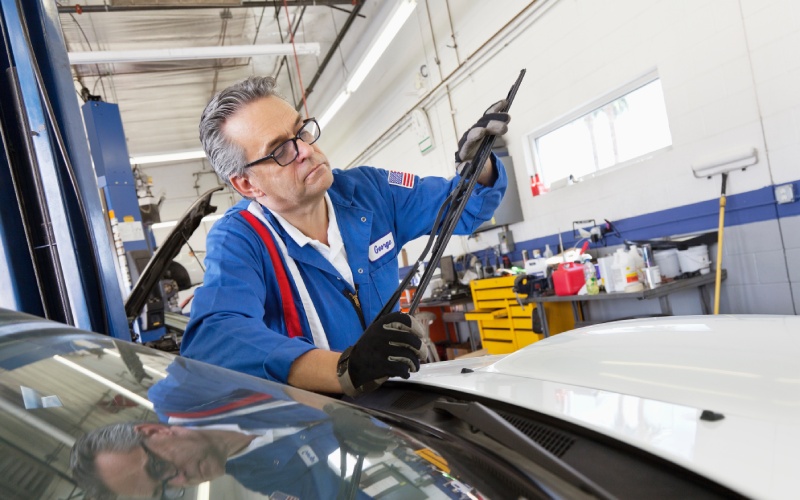
Need installation? Our service team can install your new blades quickly, check arm tension, clean the glass in the parked area, and confirm nozzle aim. You get the convenience of in-stock parts, factory-level fit, and professional installation in one stop.
We also inspect related items during routine service: washer pumps and hoses, nozzle aim, and the cowl area where debris can trap moisture and shorten blade life. Catching those small issues early keeps everything working the way it should.
Ready to refresh your view? Stop by our parts counter near Milwaukee, WI, and we will match the correct blades, demonstrate the install, or coordinate an Express Service swap so you are in and out quickly.
Frequently Asked Questions:
How often should I replace my wiper blades?
Plan every 6 to 12 months. Replace sooner if you see streaks, chatter, or a hardened edge after cleaning. Frequent freeway driving and outdoor parking usually shorten blade life.
Can I mix different blade types or sizes on my vehicle?
Stick with the exact size for each position and replace blades in pairs on the front for balanced performance. You can mix types technically, but matching styles usually delivers the quietest, most even wipe.
Why do brand-new blades still chatter or streak?
Glass contamination is the most common reason. Clean the windshield thoroughly with a dedicated glass cleaner or polish, wipe the blade edges, and confirm the adapter is fully seated. If the arm’s spring tension is weak, have it inspected.
Do rear wipers need special blades?
Yes. Rear blades are vehicle-specific and often include unique caps or adapters. We stock the correct rear blade for your make and model and can install it in minutes.
Is washer fluid choice important?
It is. Use a quality automotive washer fluid formulated for clear, streak-free cleaning. Avoid household detergents that can leave residue, dry rubber, or clog nozzles.
Can I replace wiper blades myself?
Absolutely. With the right blade and adapter, most installs take a few minutes. If you prefer, our Express Service team can handle installation and check arm tension and nozzle aim at the same time.
Good wiper blades are a small investment that pays off every time you drive, whether you are navigating downtown stoplights or merging onto I-41 at dusk. If your view is anything less than crisp, visit our parts department and let our team match the right blades, fluid, and installation approach for your vehicle. You will notice the difference the next time you hit the washers and watch the glass clear in a single, silent pass. .
0 comment(s) so far on Clear Sight, Safer Drives — Wiper Blade Issues, Fixes, and When to Replace, plus Parts Support near Milwaukee, WI