

Why Uneven Tire Wear Matters for Milwaukee, WI Drivers
Russ Darrow Nissan of Milwaukee – Why Uneven Tire Wear Matters for Milwaukee, WI Drivers
Uneven tire wear is one of those vehicle issues that can sneak up quietly. Your car may still drive, your steering wheel may feel mostly normal, and your daily route through Milwaukee might seem routine. Then, during a closer look, you notice one tire edge is wearing faster than the rest, the tread looks choppy, or the vehicle feels slightly noisy at road speed. For Milwaukee, WI drivers who regularly travel along North Avenue, Mayfair Road, Bluemound Road, or I-94, tire condition affects more than comfort. It can influence stopping distance, fuel efficiency, steering response, ride quality, and the life of your tires.
At Russ Darrow Nissan of Milwaukee, our service team looks at tire wear as part of a bigger maintenance picture. Tires connect your vehicle to the road, but wear patterns can point to alignment issues, suspension concerns, improper inflation, missed rotations, wheel balance problems, or road impact damage. A tire may be showing symptoms long before a dashboard warning appears. That is why routine tire inspections and rotations can be valuable even when the vehicle feels fine. Drivers who split time between city streets, freeway ramps, school drop-offs, shopping near Mayfair, and neighborhood parking lots benefit from having tire tread, pressure, and wear patterns checked by trained technicians.
Common Tire Wear Patterns and What They Can Mean
Tires often tell a story. Wear on both outer edges may suggest underinflation. Wear in the center may point toward overinflation. Feathering, cupping, or one-sided shoulder wear can signal alignment or suspension concerns. If a vehicle pulls to one side, vibrates at higher speeds, or has a steering wheel that sits slightly off-center, the tires may already be reacting to a mechanical condition. These symptoms are worth checking before the tread wears down beyond the point of simple correction.
- Inner or outer edge wear: Alignment angles may be outside the recommended range, causing one side of the tire to scrub more heavily against the road.
- Cupping or scalloping: Worn suspension components, imbalance, or repeated impact with rough pavement may create an uneven, wavy tread surface.
- Center tread wear: Tire pressure may be too high, concentrating road contact in the middle of the tread.
- Both-edge tread wear: Tire pressure may be too low, placing extra load on the outer shoulders.
- Patchy wear after rotation: A balance concern, damaged tire, or wheel issue may need additional inspection.
Milwaukee roads include a mix of residential streets, busy commercial corridors, and freeway driving. That variety can make tire maintenance especially important. Stop-and-go driving creates frequent braking and turning loads, while higher-speed freeway travel makes vibration and balance concerns more noticeable. Parking maneuvers, curb contact, potholes, and construction zones can also affect alignment. Even a small alignment change can shorten tire life if it goes unchecked for many miles.
Why Tire Rotations Help Tires Last Longer
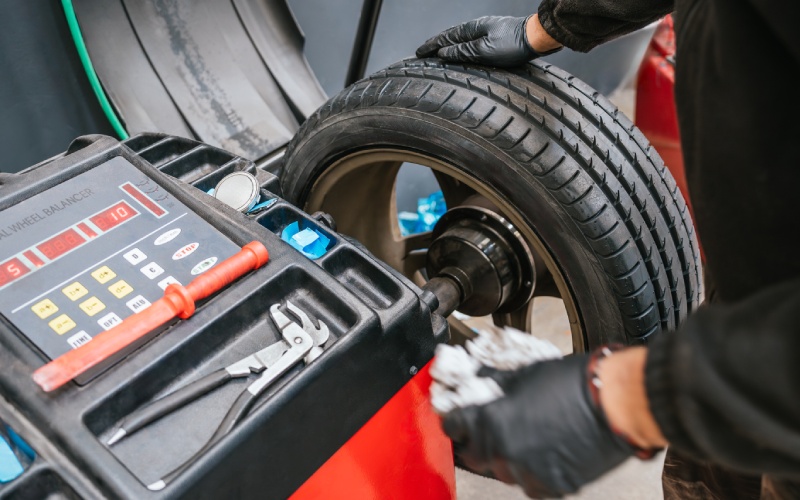
Tire rotation is one of the simplest ways to promote even wear. Front and rear tires do different jobs depending on your vehicle layout, drivetrain, steering design, and driving habits. On many vehicles, the front tires handle steering and a large share of braking force, so tire positions can wear at different rates. Rotating tires helps distribute that wear more evenly across all four corners. Our Nissan Express Service includes tire rotation and balancing among available maintenance services, and every Express Service includes a complimentary multi-point inspection for added visibility.
During a multi-point inspection, technicians can examine tread depth, tire wear, inner liner condition, brake pad thickness, rotor condition, battery health, fluids, lights, wiper blades, hoses, belts, suspension components, and signs of leaks. This broader view matters because tire wear does not always come from the tires alone. For example, worn shocks or struts can allow the tire to bounce against the road surface. A brake issue can create heat or drag at one wheel. A loose steering or suspension component can change how the tire contacts the pavement.
When New Tires May Be the Better Answer
Sometimes a rotation or alignment cannot restore a tire that has already worn unevenly or lost too much tread depth. If tread is too low, sidewall damage is present, the inner liner is compromised, or road impact has created a structural concern, replacement may be the responsible recommendation. Our parts department carries a wide selection of tires for small cars, SUVs, and full-size pickups, helping match the correct type and size to your vehicle. Our team can also assist with Nissan models such as Rogue, Sentra, Kicks, Altima, Pathfinder, Frontier, Murano, Armada, and more.
If your household has more than one vehicle, it can be helpful to schedule tire inspections around normal maintenance rather than waiting for a warning sign. Pairing tire checks with oil changes, battery diagnostics, brake inspections, or wiper replacement can save time and create a more complete view of vehicle condition. Our service department in Milwaukee, WI, is open Monday through Friday from 7:00 AM to 6:00 PM and Saturday from 7:00 AM to 5:00 PM, making it easier to plan maintenance around work, errands, and family schedules.
Frequently Asked Questions:
How often should tires be rotated?
Many vehicles benefit from tire rotation at regular maintenance intervals, but the best schedule depends on your model, tire type, drivetrain, and driving habits. Our service advisors can review your Nissan maintenance schedule or inspect another make or model.
Can uneven tire wear be fixed with alignment?
An alignment can correct the condition causing future wear, but it cannot replace tread already worn away. If wear is severe, tire replacement may be needed for proper performance and safety.
Why does my vehicle vibrate after tire wear appears?
Vibration may come from imbalance, cupped tires, wheel damage, suspension wear, or tire construction concerns. A technician can inspect and test the vehicle to identify the most likely cause.
If you notice uneven tire wear, a pull in the steering, vibration, low tread, or unusual road noise around Milwaukee, schedule a tire inspection with our service team. We can check your tires, alignment indicators, brakes, suspension, and related maintenance items, then explain the next steps clearly. Contact our service department today to keep your vehicle riding smoothly, steering confidently, and ready for the roads ahead.
0 comment(s) so far on Why Uneven Tire Wear Matters for Milwaukee, WI Drivers